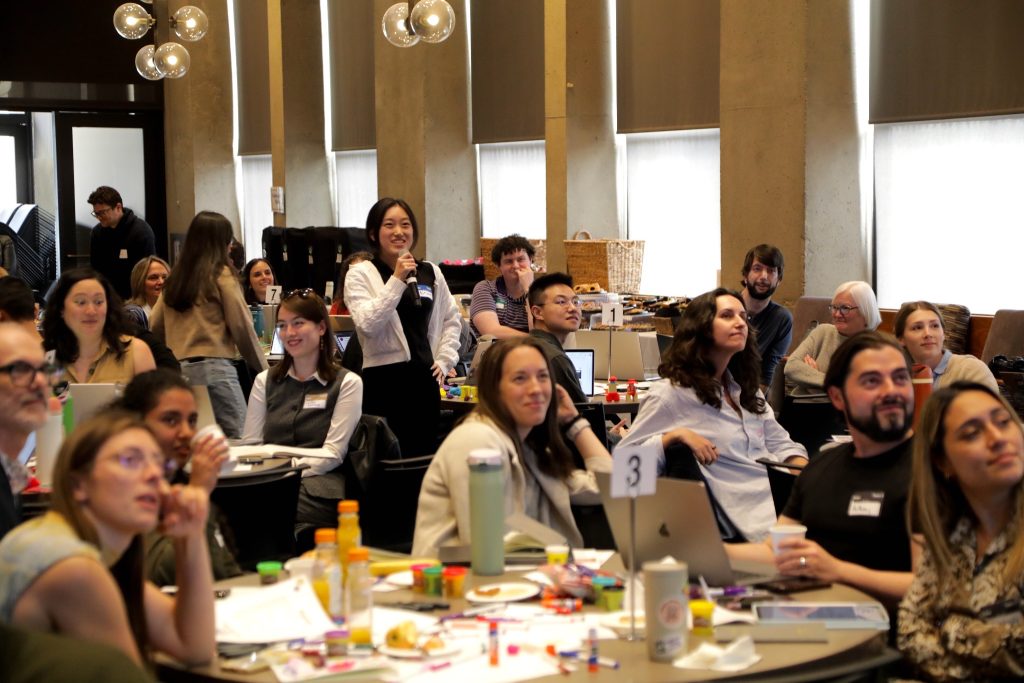
Incoming student Siyuan Liu asks a question of instructors at the 2026 Future Lab
by Sabrina Ho
Envisioning the future is hard. Forecasters of the past predicted we’d all be behind the wheel in a flying car with a robot maid by now—but few imagined we’d have advanced artificial intelligence in our pockets. And it’s even harder to imagine the future for something so threatened in the present: public interest media.
But on May 8th, that’s just what industry experts, media professionals, students, and community leaders came together to do.
The premise of the lab was simple: look 15 years into the future and envision new models, policies, and technologies to sustain public media as essential civic infrastructure.
The Crisis of Trust
Before working together to design the future, teams were asked to confront the realities of the present. When considering the most pressing and vital problems of today, teams called out similar challenges they were facing across their various organizations from public radio, news stations, and non-profits. The discussion revealed that public media is currently plagued by competition for attention with fear-based reporting, sensationalism, and an overwhelming barrage of content. Opaque algorithms dictate what audiences see, and they don’t reward quality or accuracy, so much as attention trends.
Furthermore, the business models of organizations are under intense pressure as donations are scarce, advertising is consolidated, and traditional public media supporters are aging out. It’s no longer just about sharing the news, but telling it in a way that convinces the public to care.
Future Thinking
The UW Comm Lead-sponsored gathering that took on this puzzle was facilitated by Andrea Zeller, a Comm Lead alumni and Advisory Board member, and Laura Porto Stockwell, CEO + Chief Strategy Officer at tmrw + tmrw. The two guided participants to consider the challenge public media is facing.
Zeller and Stockwell explained that Futures Thinking is a strategic mindset supported by a set of tools and methodologies that help us explore what could happen next, rather than just reacting to what’s happening now. Participants were asked to leap forward to 2041 and design an “artifact of the future” meant to fundamentally solve the previously mentioned problems. This “speculative design” approach allowed teams to combine their unique backgrounds and roles to assess these challenges. Teams were encouraged to come up with ideas that were ridiculous, fresh, and thought-provoking. No idea was too big or out-of-the-box.
Sarah Ninivaggi, a Comm Lead affiliate instructor and VP of Quinn Thomas, explained how the event fostered an environment for open collaboration.
“Comm Lead creates a space where people can really share ideas, ask questions, think big, and no idea is too small or too silly for people to talk about,” Ninivaggi said. “It was an energizing day to spend time learning from people with really good ideas and observations.”
Natalie Rawson, a Comm Lead student (cohort ’25, MCCN) and Morning News Producer at King 5 News, shared a similar sentiment, finding the futuristic approach refreshing.
“Today challenged me to think outside the box,” Rawson said. “I think there was something inspiring about thinking so far in the future and thinking so ridiculously and imagining a totally different world. Seeing that as a possibility and opportunity was really exciting.”
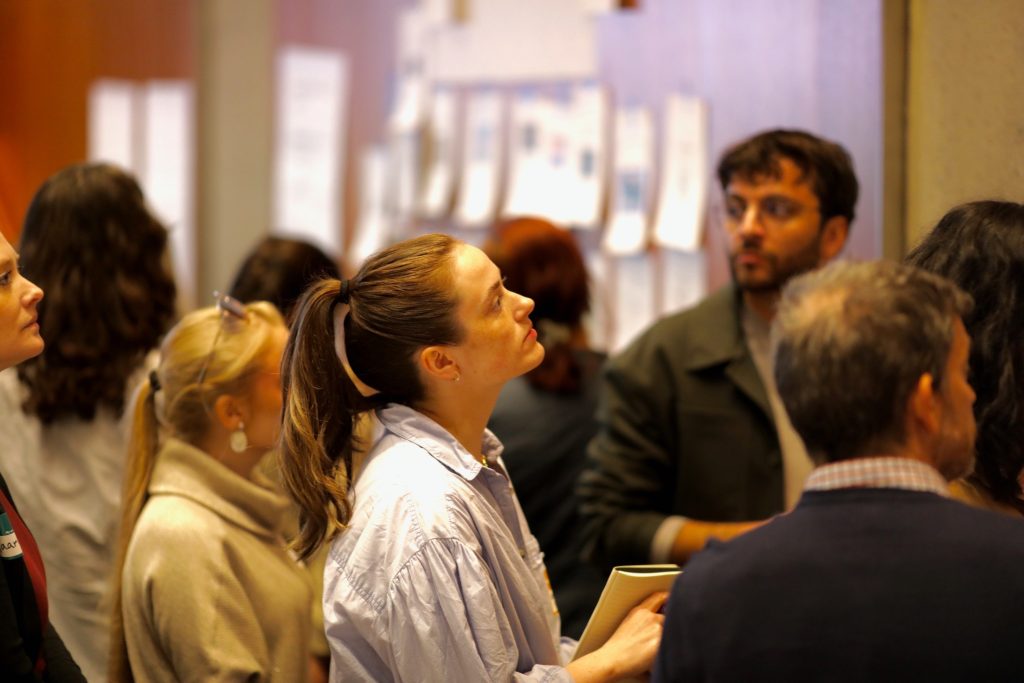
Natalie Rawson evaluates signals of change at the 2026 Future Lab
Beth Topping, Membership Director at Cascade PBS, found this methodology of free thinking particularly liberating for addressing today’s institutional hurdles.
“I thought this was just a really wonderful exercise for understanding what that future could look like, just kind of breaking out of all of the constraints that we hold ourselves to,” Topping said.
By removing the logistical barriers of today, Future Lab empowered participants to explore innovative ideas that considered public needs in new ways.
Designing Artifacts for the Future of Public Media
Participants across eight teams worked closely together to create unique artifacts that considered its potential impact and place in the future. The results were a diverse range of strategies that considered everything from immersive technology to a desire to disconnect from the online sphere.
Several teams focused on reclaiming physical and mental spaces from digital noise. Team 4, “The Trust Architects,” reimagined public media as a trusted public space to replace lost “third spaces.” Meanwhile, Team 1 introduced themselves as “Life Mode” with their Attention Protection Underwear, a creative artifact targeting anyone overwhelmed by constant data exposure. Similarly, Team 6 designed a “Content Consent Device,” an auditory earpiece that blocks out all online media to preserve humanness. Team 3, on the other hand, created “The Notebook,” leaning into nostalgia to bring people back to the sacred, analog experience of sharing information directly with others.
Other groups approached the activity through a more advanced technological lens in order to promote transparency in public media. Team 5’s “The Fourth Space” utilized VR glasses as a media asset management library, allowing consumers to be part of a journalist’s entire reporting journey in order to hold them accountable. Team 8, “Early Birds,” also incorporated VR by proposing a wearable contact lens that lets users travel alongside a reporter during live interviews. Meanwhile, Team 7 conceptualized “Hey Vera,” a holographic orb that crowdsources public records, turning anyone who queries it into a participating reporter to build community relevancy.
After several hours of framework building, brainstorming, designing and iterating, the ideas were considered by media industry leaders.
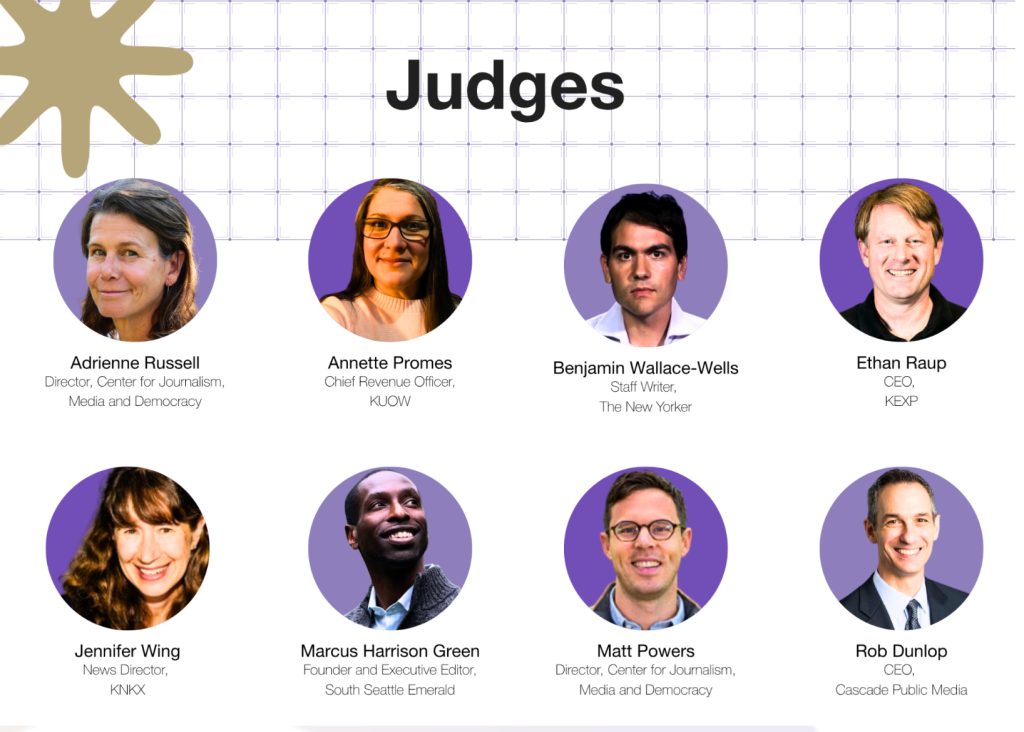
2026 Screen Summit Judges
Matt Powers, Director of the Center for Journalism, Media, and Democracy and an event judge, was inspired by the creativity in the room.
“I was definitely impressed. They were really out of the box and very innovative,” Powers noted. “We went all the way through from some things that were very futuristic and science fiction-oriented to other things that thought maybe the future is actually going back to the past.”
Looking Ahead
After a tough deliberation, the judges ultimately chose Team 2, “Public El,” as the winner. The judges were impressed with their Empathy Translator, an artifact designed to scale empathy globally by revealing how different users feel about certain online texts. The artifact addressed the real challenge of understanding our own emotional reactions to the news and seeing how differently others respond to those same stories. Team 4, The Trust Architects, was the runner-up, with the judges praising their compelling storytelling and funding model.
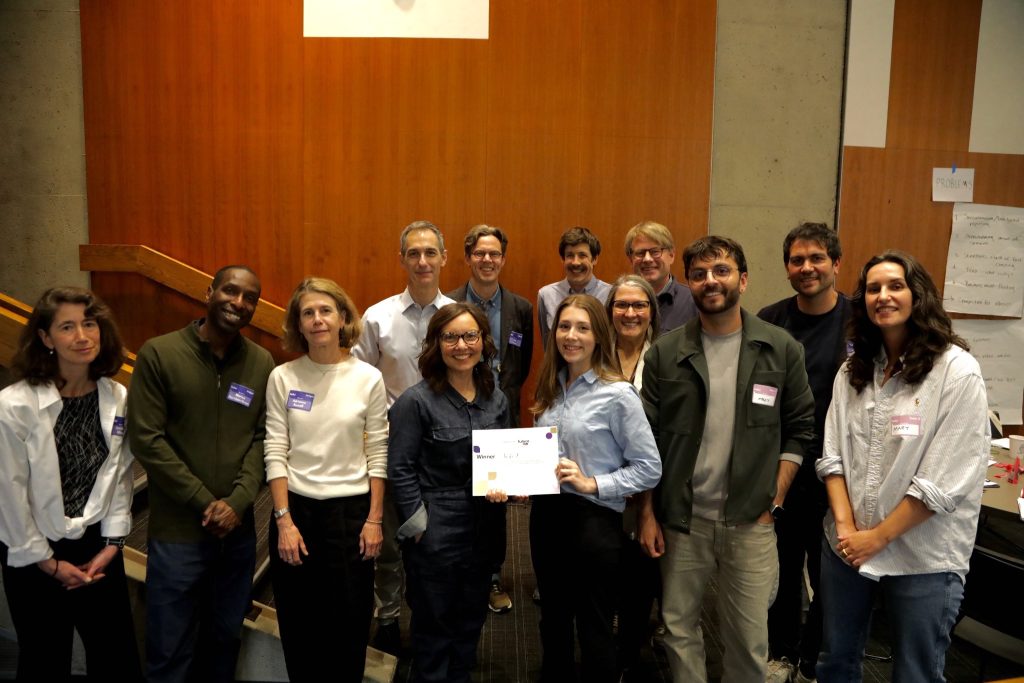
The winning team alongside the judges
While Future Lab was only a one-day event, the ideas exchanged proved that we already have the creativity to shape the future of public media. By embracing the unknown, Comm Lead’s students, alumni, and industry leaders showed that a shifting media landscape is simply an invitation to invent what comes next.

 University of Washington
 Department of Communication