by Sabrina Ho
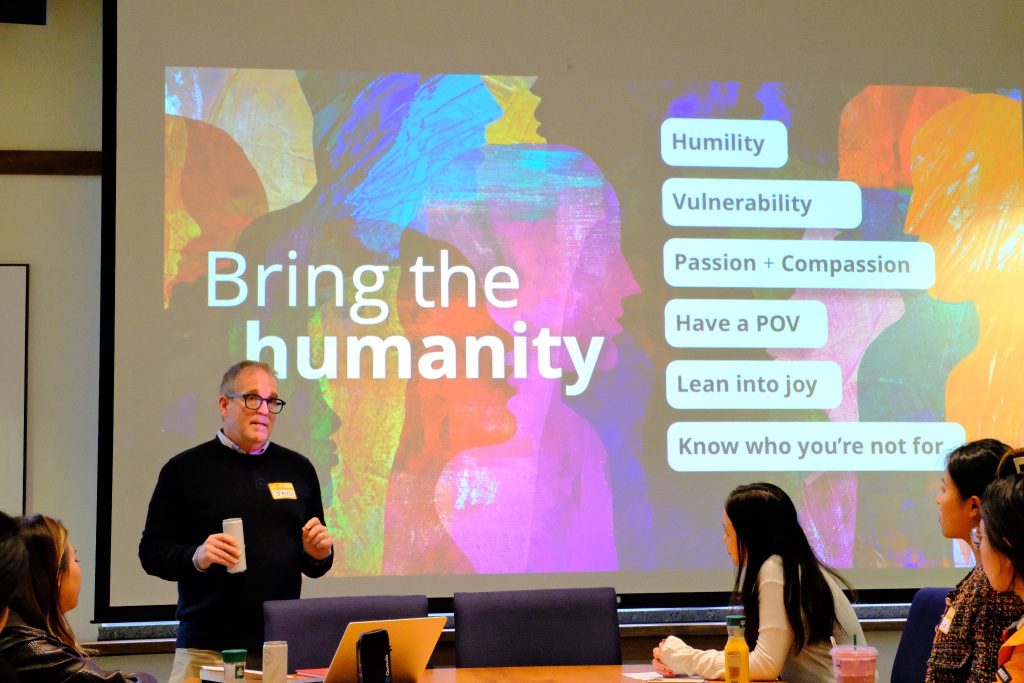
Jay Picard, Brand & Campaign Architect, explains important qualities to have as a storyteller
The Monotony of Modern Storytelling
If you’ve recently read something and caught yourself thinking, Did AI write this?, you’re not alone. For the first time in human creation, we have to ask ourselves if the media we are engaging with is actually grounded in the human experience.
Think about your favorite book, film, or song. How did they make you feel? Perhaps it inspired you, challenged your worldview, or simply made you want to get up and dance. Impactful storytelling has the undeniably human ability to inspire someone to take action or feel something.
But what happens when we choose a machine to tell a story over ourselves?
AI in Storytelling: What is Lost and Gained
One LinkedIn user recently described the effect of AI on storytelling as “fast food.” We constantly hear buzzwords like “efficiency” and “optimization” and “workflows,” but rarely discuss what we are trading off in exchange for that enhanced productivity. In pursuit of perfection, we have sacrificed everything that makes a story unique. The most authentic stories are messy, imperfect, and human. They’re created by hand through meticulously slow, but thoughtful creative processes. When we hand that process over to AI, we inevitably end up seeing the same “blockbuster” formula replicated over and over again, resulting in stories that feel shallow.
The need for authentic human connection is exactly why human storytellers remain irreplaceable. Freelance video editor and marketing specialist, Abigail Salmon (cohort ‘25, MCCL), views storytelling not just as part of her job, but as an enormous source of joy in her life. She believes that stories are a core aspect of being human and the most successful ones leave her with vivid memories afterward, something AI struggles to replicate.
Because of this, Salmon has set clear boundaries in her personal and professional work. While she refuses to use AI in her creative work like illustrating comics and graphic novels, when she does use it, she approaches it with intentionality.
“When I write more personal or creative stories, I prefer to write them myself because they are more connected to my own emotions and voice,” Salmon explained. “For me, AI can support strategy and structure, but the most personal expression should come from myself.”
Fellow Comm Lead student Xuewei Yan (cohort ‘25, MCDM) shares a similar philosophy. Yan uses AI as a supporting tool to organize ideas, improve logic, and polish language, but believes that it doesn’t replace human perspective.
“For me, a meaningful story is something that resonates with me emotionally,” Yan said. “I think a successful story is one that stays with people after they finish reading or watching it.”
While AI can produce work that is perfectly structured and polished, the stories that linger are honest and human. It seems like the professional world is catching on to this reality too. Last year, the percentage of LinkedIn postings in the U.S. mentioning ‘storyteller’ doubled, boasting roughly 50,000 listings under marketing and over 20,000 under media and communications.
How Creative Professionals use AI
There’s clearly a need for both storytellers and AI tools, but how can you find the balance between the two? I spoke to Comm Lead faculty members Brian Marr and Anita Verna Crofts about the importance of storytelling in their work and how AI plays a role in it.
Marr is currently a consultant at Work & Co focused on designing digital products with agentic capabilities. He also has a background as a product marketer and manager at tech giants like Microsoft and HP, as well as executive leadership in the agency world.
As a Senior Affiliate Instructor at Comm Lead, Marr teaches COMMLD 520 B: Advanced Marketing, an advanced course that explores the evolving challenges and opportunities in marketing management. Students delve deep into topics such as customer insights, digital transformation, and AI marketing through case studies, group projects, and industry experts. Through it all, Marr encourages students to actively experiment with AI in their work and use it to think more analytically.
When it comes to his own creative process, Marr approaches AI with curiosity. While he uses AI as a sparring partner to get his ideas onto paper, he never settles for its initial output. He points out that writing a “first draft” is no longer the most valuable skill a communicator brings to the role. Instead, the real value lies in asking smart questions, curating content, and knowing what voice you want to project. It’s only through multiple rounds of refining, rewriting, and incorporating his distinct voice that a piece is ready to be shared. Ultimately, it’s up to the individual to decide how to use AI as a creative tool that can best support them while maintaining their unique voice and judgement.
“I’ve seen [commoditization] happen before in digital, I think we’ll see it happen again with AI,” Marr says. “The brands and the people that maintain a unique voice and a unique story, and that tell that authentically in really powerful ways, are the brands that will continue to stand out.”
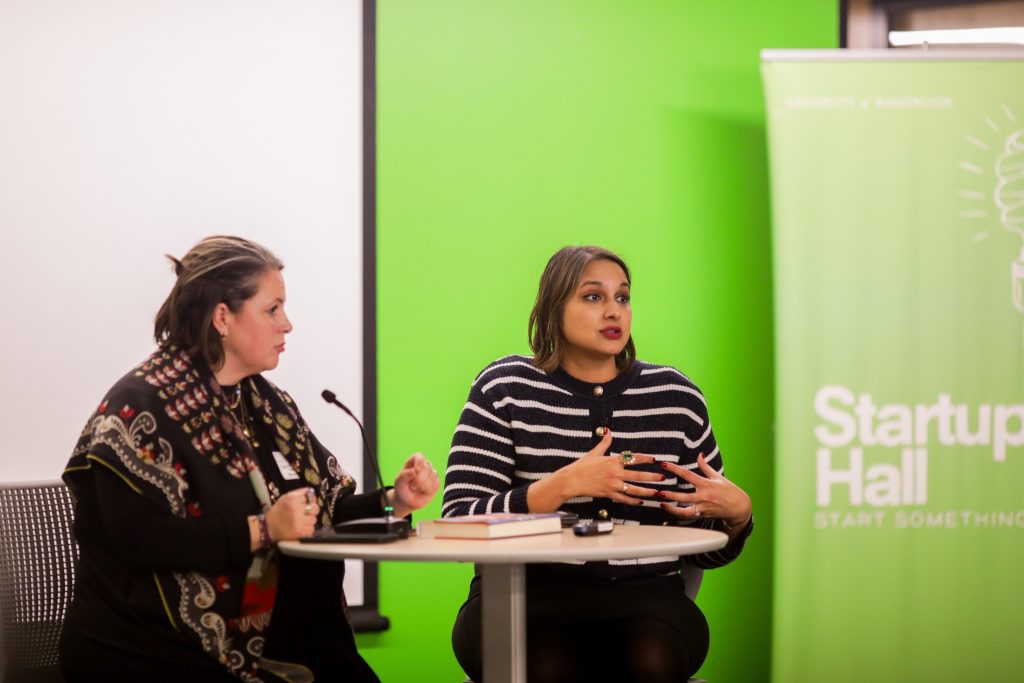
Ruchika T. Malhotra, bestselling author at a Comm Lead Book Talk event, March ’26
For Crofts, Comm Lead’s Artist in Residence and instructor for COMMLD 564A/B: Professional Long-Form Writing, writing is a foundational communication skill. She challenges her students to translate complicated ideas into accessible, actionable insights. A successful piece should leave readers with a new perspective that expands their understanding of the world and makes them excited to share it with their own communities.
Yet, achieving this level of understanding can be challenging. Long-form writing is a meticulous process that requires the writer to become an expert of their topic through rigorous research. However, the effort pays off immensely as communicators gain confidence in their voice and perspective.
Because this critical thinking is so important to the process, Crofts maintains rules regarding AI in her classroom. While she permits students to use AI tools for research and even “sparring” to test a thesis, using AI for composition is off-limits. This boundary is set to protect her students’ creativity and ensure they experience the productive struggle required to grow as storytellers.
“Comm Lead, by committing to storytelling, is committing to a creative life,” Crofts said. “And a creative life is one that is a learning mindset, open mind, and one that is always looking to contextualize what they are observing into the broader world around them and to do it in a way that is accessible and intentional in terms of bringing people in.”
What We Learned
In communications, AI tools have helped optimize workflows by automating repetitive tasks and generating real-time analytics into engagement. However, where creatives go wrong is failing to set up guardrails when making decisions or generating output.
If you are looking to integrate AI into your storytelling while staying true to your own voice, here are a few takeaways to keep in mind:
- Treat AI as a sparring partner: AI can assist in the process from research to editing and even challenging your logic. However, you must always trust your own judgment when accepting the output.
- Embrace the creative struggle: While it can be tempting to completely rely on AI to save time, you would be doing yourself a disservice. Learning, rewriting, and investing substantial time is all part of the storytelling process, and is how you incorporate your human experience while developing your unique voice.
- Ground your stories in human connection: The stories that leave a lasting impression are the ones that are honest, relatable, and rooted in lived experience. AI can’t perfectly replicate the nuances of human emotion nor can it really understand your personal worldviews.
Storytelling at Comm Lead
Storytelling is found at the heart of Comm Lead. While our courses span a range of disciplines from marketing and UI/UX to content creation, the fundamentals are all rooted in impactful, authentic storytelling.
That’s why, at the end of each academic year, the program hosts Screen Summit. This is where students present their best work from the year to classmates, colleagues, and a panel of industry judges. Divided into three categories—story, strategy, and design—the summit is a celebration of storytelling across mediums, including video, audio, and written work.
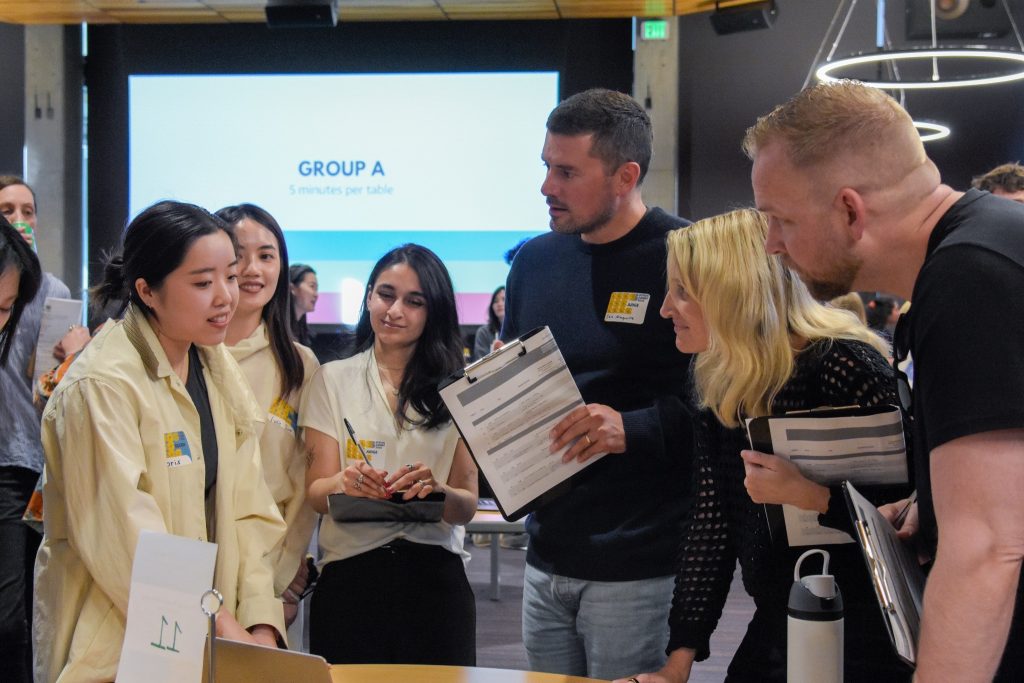
Students and industry judges at the 2025 Screen Summit
Screen Summit is open to everyone. If you’re interested in connecting with a community of creative and storytellers, this is the perfect place to start.
Stay connected and check out Comm Lead’s upcoming events and Instagram to keep up with our creative community of storytellers.

 University of Washington
 Department of Communication