Cohort: 14
BlueTripod, Creative Director/Video Producer
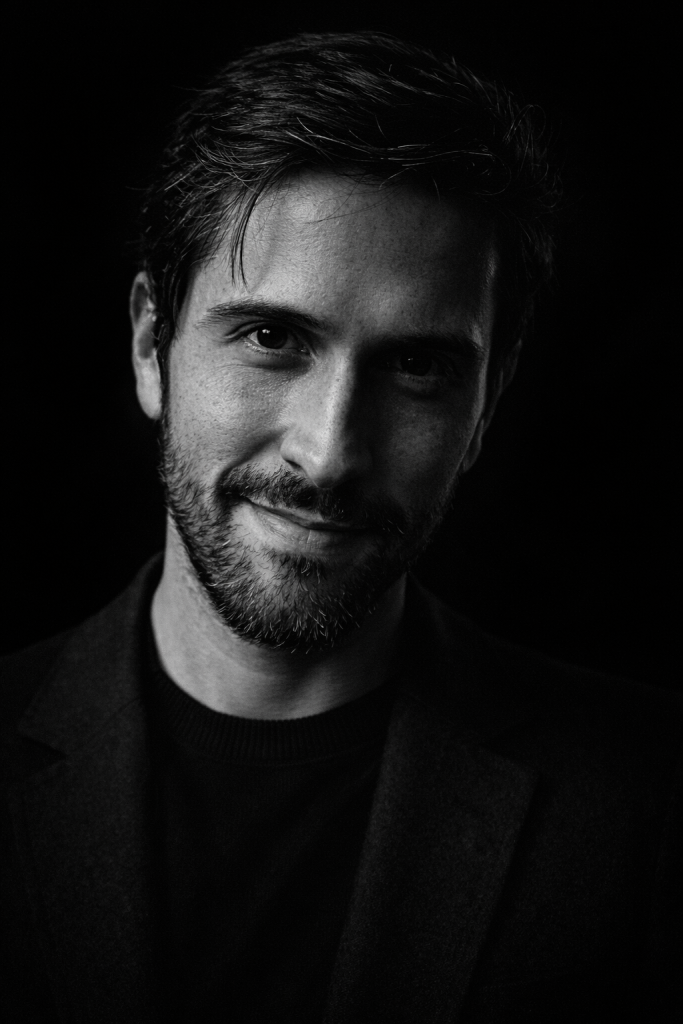
To start, if I approached you at a picnic and asked what you were up and enjoying these days, how would you answer?
Lately, I’ve been in full “new house mode” outside Medellín in the mountains. A few weeks ago, my plant knowledge was basically the difference between a pine and a palm tree. Now I’ve been learning a little about gardening and botany.
I’ve also been exploring the small town near our house: trying coffee shops, going on hikes, and photographing sunsets. On the creative side, I’ve been playing with some AI tools too, especially Suno.
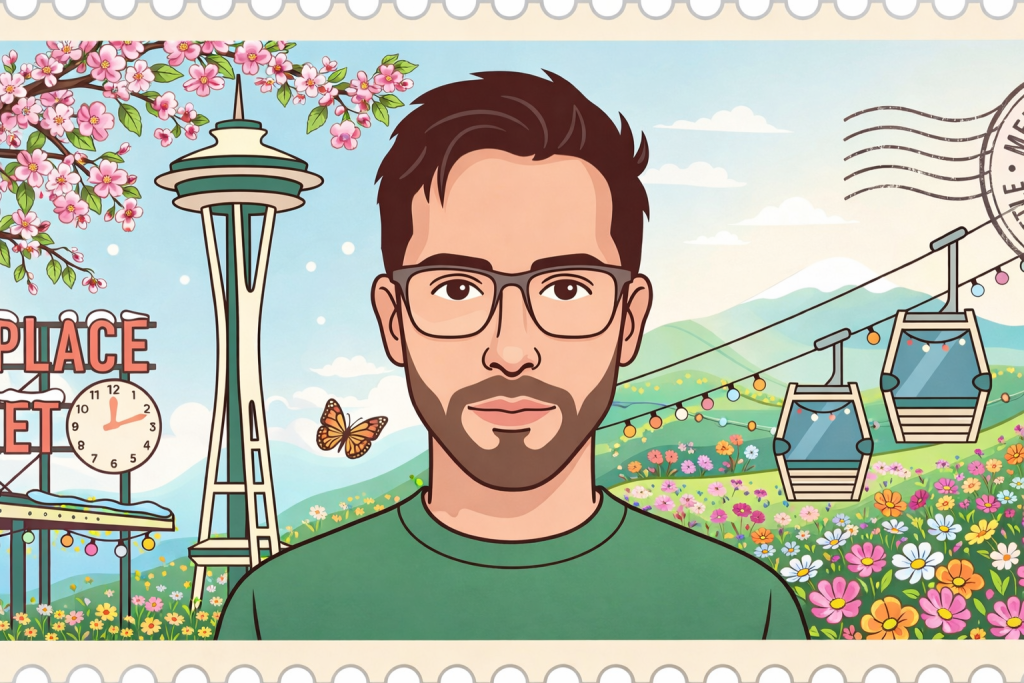
(Note: see the AI-created self-portrait at the end of this conversation that Sebastian produced to show his life in two countries: the US and Colombia.)
Turning a random idea into a song is incredibly fun.
The theme of this newsletter is our global alumni community. You grew up in Colombia then did your graduate degrees in the USA, then eventually returned to Colombia where you’ve founded a successful business. Can you share a bit about your career path and what you’ve learned about the cultural environments of both the US and Colombia?
My journey began in Colombia, where I studied product design engineering. This led me to an internship in the Netherlands in 2005-2006 at a Furniture Design studio, where I gradually developed a passion for 3D and animation. First through design, then storytelling.
Returning to Colombia, I co-founded Cuatrosfera, a small design firm specializing in branding, 3D animation, and website design. We later sold the company to SM Digital, a leading Marketing agency in Medellin, where I served as Director of Content Production for nearly five years.
In 2014, I moved to Seattle to join the Comm Lead cohort at the University of Washington. This experience, focused heavily on video production, profoundly shaped my approach to communication and creative leadership. I also formed invaluable connections with friends and professionals, many of whom I continue to collaborate with today. After I graduated from Comm Lead, I founded BlueTripod, a video production company based in Seattle, in 2017.
BlueTripod remains a Seattle-based operation, with most of my clients—including Precor, Rena Ware, Code.org, and Seven Griddle Media—located in the US. My professional life constantly bridges the US and Colombia, culturally and logistically, through frequent travel.
Working across these two distinct environments has highlighted their different strengths: the US prioritizes clarity, structure, adherence to timelines, and direct expectations, while Colombia offers flexibility, creativity, warmth, and improvisation. I’ve found that the best outcomes emerge from blending both approaches: robust systems combined with genuine human connection.
What are some vignettes from your work life that illuminate cross-cultural observations and key takeaways?
I’ve been extremely lucky to work in the Netherlands, Colombia, and the US—three different approaches that have shaped how I collaborate and lead.
In Europe, I loved how culture and art are embedded in so much of what people do. It’s hard to put into words, but I felt this constant connection between cultural references, technical skills, and human development—like creativity wasn’t a separate “department,” it was part of everyday life.
One of my favorite memories is realizing that, at the design studio where I worked, we were bouncing between Dutch, Spanish, and English, and still managing to share ideas smoothly. It showed me that when the intention is clear, language becomes less of a barrier than you’d think.
In the US, a “good meeting” often means a clear agenda, decisions, and next steps. Clarity and structure are a kind of respect for everyone’s time, and I’ve learned a lot from that.
In Colombia, a “good meeting” often includes real rapport and trust-building first. Relationships carry a lot of weight, and that human connection usually makes collaboration smoother in the long run.
I’ve found the sweet spot is combining both: start human, end structured.
Feedback is another big contrast. In the US and the Netherlands, direct and concise feedback is usually seen as clear and efficient. In Colombia, people often deliver feedback more softly to protect relationships. My takeaway has been to be explicit about intent (I’m saying this because I care about the outcome) and aim for kindness and clarity.
And then there’s time: timelines in the Netherlands and the USA can be very precise. Colombia can be more adaptable when reality changes fast. So I try to plan like an American and when needed, problem-solve like a Colombian.
What advice would you share for someone with international career ambitions?
Remember that your background and experience are extremely valuable. You bring tools, perspectives, and skills that may be unique to your culture, and that can make you a real asset to the clients or employers you work with. Don’t underestimate yourself or undersell what you bring to the table.
At the same time, invest intentionally in communication skills. Join professional meetups and groups where you can connect with people who share your interests, and practice communicating clearly across different styles and expectations. Stay curious and open to opportunities because they often show up unexpectedly in simple conversations, especially as your network becomes wider and stronger.
Finally, what’s a favorite piece of content—anything goes!—you’ve been hooked on lately you think our alumni might enjoy?
My wife and I love crime-focused thrillers. Right now we’re watching Mr. Mercedes—an amazing series produced by Stephen King and based on a trilogy of his novels. I’ve also been taking a few MasterClass courses, which I highly recommend. And lately I’ve been weirdly obsessed with the songs I’ve been “making” on Suno (I know… not exactly me. Thanks, AI!). It’s mind-blowing and kind of scary. I feel equally excited and constantly questioning what this technology means for the future—but that’s a topic for another day.

 University of Washington
 Department of Communication