Cohort 18, Master of Communication in Communities & Networks (MCCN)
Documentary Photographer, Visual Storyteller and Artist
Charissa Soriano on Linkedin
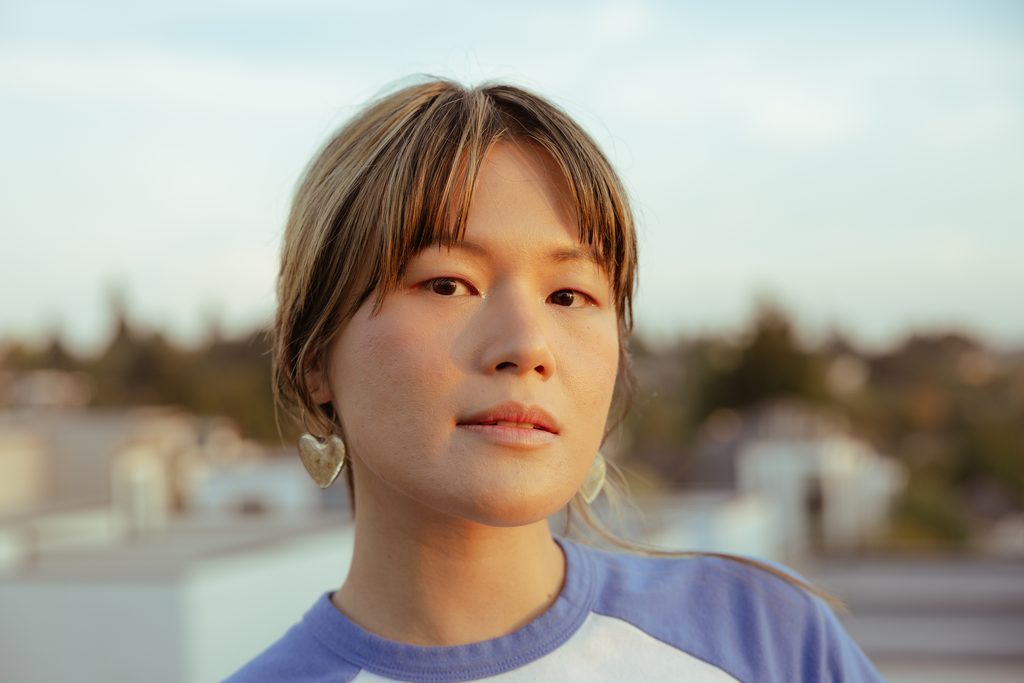
To start, if I approached you at a mixer and asked what you were up to and enjoying these days personally and professionally, how would you answer?
Personally, I’ve enjoyed having quiet time in the morning to journal and meditate.
Professionally, I recently had a photo assignment for a publication where I traveled to Bremerton by ferry and interviewed two couples on what they love about this Navy city and why it’s been worthwhile having a home there versus Seattle. I enjoyed the process of making pictures in a place that I had never been to. It was also purely documentary or photojournalistic, instead of another project in portraiture, which was a refreshing change.
The Fall 2026 alumni newsletter theme is storytelling in all its various forms, a topic near and dear to Comm Lead. What is your professional relationship to storytelling and how and when did you become involved in the craft?
Storytelling is foundational to my work as a photographer and artist. I don’t just make pretty pictures. I create photos that reveal an untold perspective, share nuanced experiences of marginalized communities, and engage community members to participate in conversation about topics like immigration. I’ve been a photographer since I was a teenager, but it wasn’t until my early 20s that I realized how photography could be a powerful storytelling tool to serve people. So I began to learn about storytelling, its different methods, platforms, and meanings. It’s the reason why I decided to pursue my graduate studies in Communication Leadership.
Can you share a bit more about your current work in photography, perhaps by sharing a project you’ve been working on lately that you’re particularly excited about?
As a documentary photographer, I have long-term projects, and one that I’ve been putting a lot of focus and attention on is Liminal. It’s a project with many faces, but at the very core, it’s my inner life as an immigrant in the U.S. from the lens of love. And it’s not the sappy, easy kind of love. It touches on grief, while exploring the healthy ways in which I’ve endured the U.S. immigration process by making art. It invites the viewer to ponder on their own experiences with love and how that has grounded or changed their life.
This project is intertwined with my personal life, which I love, because it forces me to look within, but also beyond.
I recently got a grant from 4Culture to do a solo exhibition for this project, and I’m really grateful for that. There is no set date yet for this exhibition–it is, however, in the works. Be on the lookout for announcements and updates by following me on Instagram.
To aspiring storytellers, what are some evergreen elements of memorable storytelling that you espouse?
The first is vulnerability. It’s hard to do, but there’s nothing quite like it.
Secondly, use a unique voice, aka, your own voice. Which for me means writing or speaking in different languages, not just English. For example, I’m gradually incorporating Tagalog in my writing because it’s my mother tongue. Voice could also be a visual voice. Look within you, more than around you, as you make pictures. Don’t refer to social media too much because it’s easy to lose yourself in that.
Finally, we always like to ask: what’s a favorite piece of content—anything goes!—you’ve been hooked on lately you think Comm Lead alumni might enjoy?
I’ve been listening to the Emergence Magazine Podcast for years, and I love it. Here is a recent episode that resonated. For the transcript, check it out here.

 University of Washington
 Department of Communication